

LTL or FTL? Here's Exactly When Each One Makes Sense
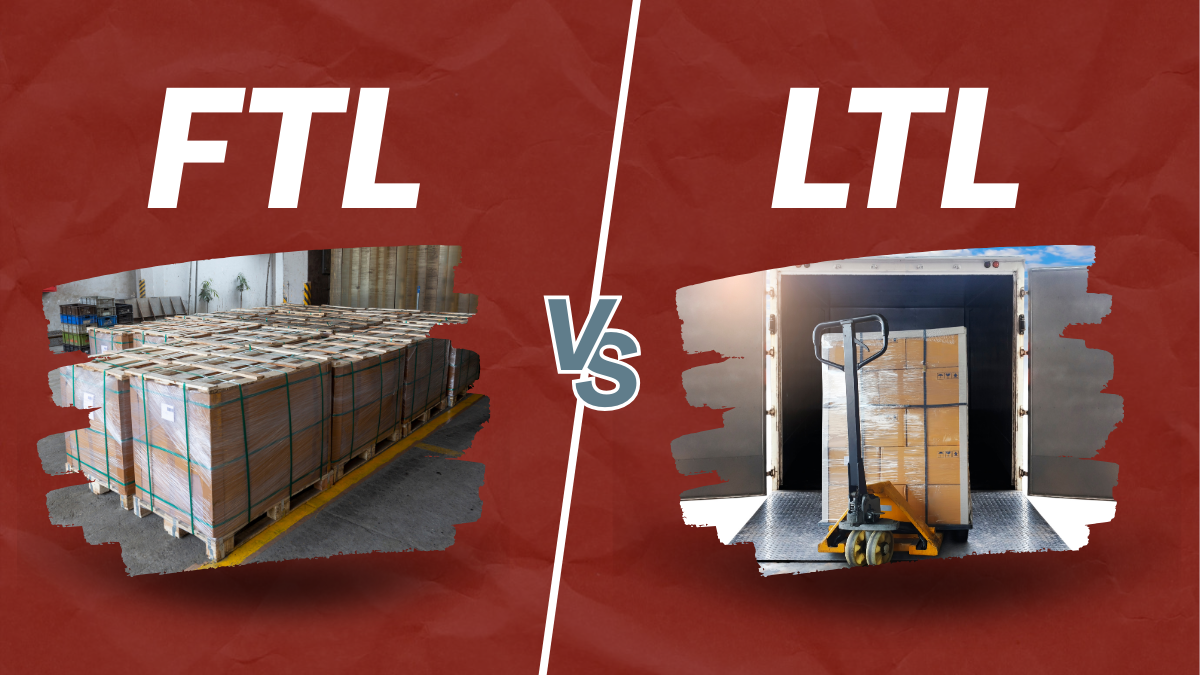
If you're shipping food products regularly, you've probably asked yourself this question more than once: "Should I ship this as LTL or wait and consolidate into a full truckload?"
It's a fair question. Choose wrong, and you either overpay for half-empty truck space or rack up LTL fees that add up fast. Choose right, and you save thousands of dollars a year without changing a single thing about your operations.
The problem? Most food distributors don't have a clear framework for making this decision. They go with gut feel, or they stick with whatever they've always done. But there's actually a straightforward way to figure out which option makes sense for each shipment.
Let me break it down.
What LTL and FTL Actually Mean
Before we get into when to use each, let's make sure we're on the same page about what these terms mean.
LTL (Less Than Truckload): You're sharing truck space with other shippers. Your pallets get loaded onto a truck with freight from 3-5 other companies. The carrier consolidates shipments going in similar directions, makes multiple stops, and charges you based on weight, distance, and freight class.
FTL (Full Truckload): You're renting the entire truck. It goes from Point A to Point B with only your freight. No other stops, no sharing space. You pay for the truck, not the weight.
The key difference: LTL is priced per hundredweight (CWT), while FTL is a flat rate per truck.
The Break-Even Point (Where the Math Changes)
Here's the rule of thumb that most logistics pros use:
If your shipment is 6-8 pallets or more, FTL usually wins.
Why? Because once you're taking up more than half the truck, you're paying LTL rates for space you could just rent outright with FTL.
Let me show you with real numbers.
When LTL Makes Sense
Don't get me wrong—LTL isn't always the wrong choice. Here's when you should stick with it:
1. Small Shipments (1-5 Pallets)
If you're only shipping 2-3 pallets, paying for a full truck is wasteful. LTL carriers specialize in consolidating small loads efficiently.
2. Urgent, Time-Sensitive Deliveries
Can't wait to consolidate? LTL gets your product moving today instead of waiting until you have enough volume for FTL.
3. Inconsistent Shipping Patterns
If you ship sporadically to different destinations each time, consolidation becomes impossible. LTL gives you flexibility.
4. Products That Can't Wait
Ultra-perishable items (fresh seafood, dairy with short shelf life) often need to ship immediately, even if it's not cost-optimal.
When FTL Makes Sense
1. Regular High-Volume Lanes
If you're shipping 8+ pallets to the same region weekly, FTL almost always wins on cost.
2. Fragile or High-Value Products
FTL means fewer touchpoints. Your freight doesn't get unloaded and reloaded at consolidation centers. Less handling = less risk of damage.
3. Temperature-Controlled Shipments
Refrigerated LTL exists, but it's expensive and risky. With FTL, you control the entire truck's temperature from origin to destination.
4. When You Can Plan Ahead
If you have predictable demand and can batch orders over 3-5 days, FTL lets you optimize both cost and delivery schedules.
The Hybrid Option: Partial Truckloads
There's a middle ground worth mentioning: partial truckloads (also called volume LTL or guaranteed truckload).
If you have 8-12 pallets but don't need a full 26-pallet truck, some carriers offer partial loads. You get dedicated space without paying for the entire truck. It's priced somewhere between LTL and FTL.
This works well for shipments that are too big for standard LTL but too small to justify full FTL.
A Simple Decision Framework
Here's how to decide for each shipment:
Ask yourself these three questions:
- How many pallets am I shipping?
- 1-5 pallets → LTL
- 6-8 pallets → Run the numbers (could go either way)
- 9+ pallets → FTL
- Can this shipment wait 2-5 days to consolidate with other orders?
- Yes → Consider FTL
- No → Use LTL
- Am I shipping to this region regularly?
- Yes → Build a consolidation schedule and use FTL
- No → Use LTL for flexibility
If you answer "yes" to consolidation and "yes" to regular shipping patterns, you're leaving money on the table by not switching to FTL.
What About Mixed Strategies?
Most smart food distributors don't pick one and ignore the other. They use both strategically.
For example:
- Monday-Thursday: Accumulate orders for your top 3 regions
- Friday: Ship consolidated FTL loads to those regions
- Urgent/small orders: Use LTL as needed throughout the week
This gives you cost savings from FTL on your high-volume lanes while maintaining flexibility for one-off or time-sensitive shipments.
The Bottom Line
The LTL vs. FTL decision isn't about always choosing the cheapest option per shipment. It's about understanding your shipping patterns and designing a strategy that balances cost, speed, and reliability.
If you're shipping 8+ pallets regularly to the same regions and you're still using LTL, you're almost certainly overpaying. If you're forcing small shipments into FTL just to "save money," you're wasting capacity and probably delaying deliveries.
The key is knowing your numbers: shipment sizes, frequency, and lane patterns. Once you have that data, the decision becomes obvious.
If you're not sure where you stand, we offer free shipping pattern analyses for food and beverage distributors. We'll look at your last 90 days of shipments and show you exactly where FTL, LTL, or partial loads make sense. No obligation—just clear data to help you make better decisions. Reach out here if you want us to take a look.